Best Online Travel Agency Development Company
Looking for the best Online Travel Agency development company? Discover how to choose the right OTA partner for flight, hotel, API, payment, and booking solutions.
 Back to Home
123/A, Miranda City Likaoli
Prikano, Dope
+0989 7876 9865 9
+(090) 8765 86543 85
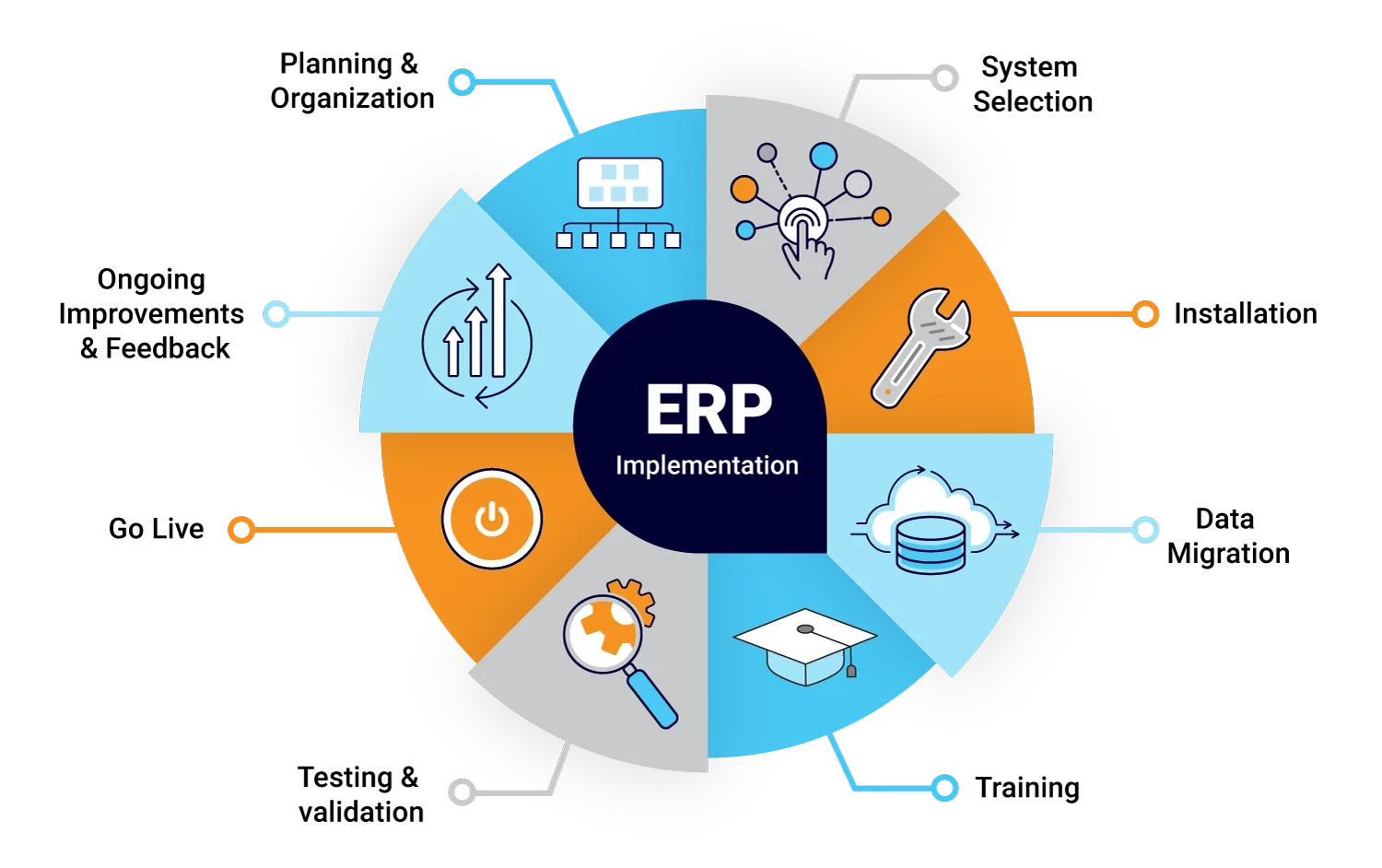






Enterprise Resource Planning (ERP) systems are becoming more and more popular among businesses as a means of streamlining operations, boosting efficiency, and achieving long-term expansion in today’s quickly changing corporate environment. ERP System Examples provide smooth communication and data flow across departments by integrating numerous corporate operations, including finance, human resources, supply chain, and customer management, onto a single platform. We will examine several well-known ERP system examples that have transformed firms in a variety of sectors in this blog article.
Enterprise resource planning (ERP) systems help organizations automate and streamline business processes for optimal performance. They coordinate data flow between a company’s different business processes to create a single source of truth. Just as a master chef creates a cohesive dining experience by expertly coordinating ingredients, cooking processes, and kitchen staff, an ERP system harmonizes various business functions—operations, supply chains, commerce, financial reporting, and manufacturing—into a seamless workflow. These systems centralize data management, improve decision-making, and optimize resource allocation to save time and reduce costs. Fortunately, there are many incredible ERP systems on the market today, each with its unique features. Which is best for business?
An enterprise resource planning (ERP) system is a complete software solution that unifies and handles a number of key business activities, including finance, human resources, supply chain management, customer relationship management, and more. It offers a single database and a collection of tools that make information transfer between departments simple while maintaining data accuracy and real-time visibility.
ERP systems automate and streamline manual processes, reducing the time and effort required for tasks such as data entry, reporting, and inventory management. This enables employees to focus on more value-added activities, leading to increased productivity.
Improved Decision Making:
ERP systems offer insightful analytics and real-time access to correct data, enabling management to take prompt, well-informed choices. This enables companies to see growth possibilities and react quickly to market developments.
Enhanced Collaboration and Communication:
By promoting cooperation and easing communication across various departments, ERP systems eliminate silos. The smooth flow of information enables teams to collaborate more successfully, improving coordination and customer satisfaction.
Scalability and Flexibility:
ERP systems are made to help businesses develop and change with the times. They provide modular functions that may be tailored to meet particular business needs, enabling enterprises to scale up or down as necessary without affecting business processes.
Cost Savings:
Although an ERP system may have a large initial cost, there may be significant long-term cost savings. By automating processes, reducing errors, and improving resource allocation, businesses may minimize labor expenses, inventory management costs, and other operational expenditures.
ERP systems are now essential tools for companies looking to develop, streamline operations, and improve productivity. The advantages of ERP systems are clear in all industries, from big businesses to small and mid-sized businesses.
Developing an Enterprise Resource Planning (ERP) system is a complex and multifaceted endeavor that requires careful planning, design, development, and implementation. Here is a high-level overview of the steps involved in developing an ERP system:
Developing an ERP system is a significant undertaking that requires careful planning, collaboration, and expertise across various domains. By following a systematic approach and leveraging best practices, organizations can develop a robust, scalable, and efficient ERP system tailored to their specific needs and objectives.
Software for enterprise resource planning, or ERP, is a complete solution that unifies several corporate operations and activities into a single system. This is the general workflow of ERP software:
In essence, enterprise resource planning (ERP) software streamlines and automates many business processes, activities, and data into a single, centralised system, therefore increasing productivity, communication, and decision-making throughout the whole organisation. By leveraging the advantages of ERP systems, businesses may more successfully achieve their strategic goals, maximise resources, and streamline processes.
Managing an Enterprise Resource Planning (ERP) system effectively is crucial for optimising business operations, ensuring data integrity, and driving organisational success. Here's a simplified approach to managing your ERP system in three essential steps:
A proactive, all-encompassing strategy that includes data governance, user engagement, performance monitoring, and continual improvement is needed to manage your ERP system effectively. You may optimise the value, dependability, and lifespan of your ERP system, fostering operational excellence and accomplishing your company objectives, by putting these three actions into practice and embracing a strategic management framework.
At Nextzen, we understand that implementing a Business ERP like BizoFin is a big step. Here are clear answers to common inquiries about our ERP modules, financial integration, pricing plans, and how we help scale your business operations.
TALENTS
PROJECTS

Nextzen provides a wide range of services, Software, Web & App Development, Business Automation, Marketing, Branding & Data services.

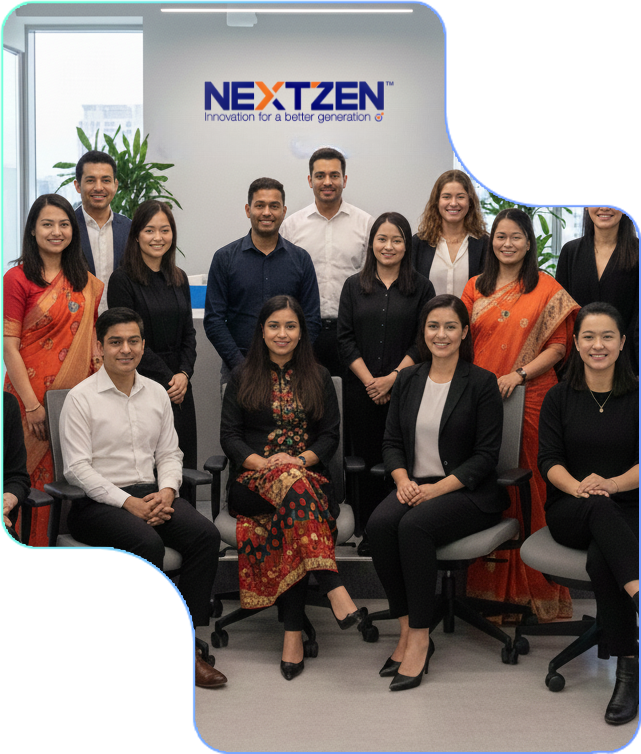
Nextzen brings over 17 years+ of experience and a client-focused approach to deliver tailored, high-quality software solutions.

Nextzen has offices in the Bangladesh, UAE, UK and Cyprus, enabling them to serve both local and international clients.

Nextzen specializes in sectors like textiles, apparel, education, retail, and healthcare, offering tailored solutions for each industry.

Yes, Nextzen offers free initial consultations to understand your requirements and propose the best solutions.

Nextzen implements strong cybersecurity measures to protect client data and ensure platform security.

Nextzen stands out for its comprehensive services, deep industry knowledge, global reach, and client-focused approach.

You can get global support from Nextzen by contacting [email protected].
Ever Find Yourself Staring At Your Computer Screen A Good Consulting Slogan To Come To Mind? Oftentimes.

Looking for the best Online Travel Agency development company? Discover how to choose the right OTA partner for flight, hotel, API, payment, and booking solutions.
The education sector is rapidly adopting digital technologies to improve academic management, communication, and online learning. As part of this digital transformation, EduFin EMS has integrated Zoom functionality into its Education Management System, helping educational institutions manage online classes and meetings more efficiently.
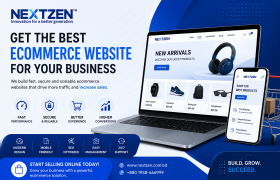
A fast, user-friendly, and SEO-optimized e-commerce website can significantly improve customer experience, search engine rankings, and conversion rates. Whether you're running a small online store or a large e-commerce platform, optimization is essential for long-term success.
With nearly two decades of proven expertise, we deliver reliable, innovative, and scalable technology solutions tailored to business needs.
We believe that trust is paramount in a relationship. We do not own or sell your data, and we most certainly do not bank on advertising-based business models. The only way we make money is from the software license fees you pay us.